0
0
- NSC.org
- NSC Shop
- Injury Facts
- Safety+Health Magazine
Cannabis can have a major impact on safety at work, and legalization is creating new challenges for employers. An NSC survey revealed one third of employees have seen cannabis use during work hours. The survey also found:
● More than half of employers that eliminated testing for tetrahydrocannabinol (THC) reported an increase in incidents or workplace performance concerns
● Most employers believe employees would feel comfortable telling their supervisor if they were too impaired to work, while less than half of employees reported they would feel comfortable doing so
● Less than half of organizations have a written cannabis policy
Check out this infographic for more survey findings.
More recent national evidence suggests the issue is even more relevant for full-time workers. A 2024 study in the American Journal of Preventive Medicine found that 15.9% of full-time employed adults used cannabis in the past month, and 6.5% met criteria for cannabis use disorder (CUD). The same study found that more recent and more frequent use, as well as greater CUD severity, were associated with higher rates of both illness and injury-related absences and skipped work.
Cannabis can affect skills that matter for safety at work. A 2024 systematic literature review in Frontiers in Pharmacology found that THC-containing cannabis products in healthy volunteers were associated with slower reaction time and impaired attention, learning, and working memory, with stronger effects at higher THC doses.
The effects of cannabis are not the same for every person or every product. Dose, THC concentration, frequency of use, route of administration, and individual factors can all influence both the intensity and timing of effects. Inhaled products tend to produce effects quickly, while oral products such as edibles may have a delayed onset and longer course, which can make self-assessment more difficult and may increase the risk of overconsumption.
This timing issue matters for workplaces. Research emphasizes that the presence of THC or its metabolites in blood, saliva, urine, or breath does not by itself establish current impairment. Some testing methods can remain positive after the period of likely acute impairment has passed, especially for frequent users. This is one reason employers should not equate a positive test with real-time impairment without other objective information.
However, states with legal recreational or medicinal cannabis are reporting an increase in fatal motor vehicle crashes involving THC. This underscores the importance of educating drivers about cannabis impairment and advocating for more research.
Regardless of legality, employers can set and enforce policies regarding cannabis impairment, usage and possession at work. While carrying small amounts of recreational cannabis in public may be legal in some states, employers are not obligated to allow it in the workplace, even if the employee does not intend to use the substance during work hours.
As state cannabis laws continue to evolve, employers are navigating a more complex workplace landscape. Cannabis use is not rare in the workforce: in a 2024 American Journal of Public Health analysis of Behavioral Risk Factor Surveillance System (BRFSS) data from 15 states, 10.7% of adult workers reported past 30-day cannabis use. Prevalence varied substantially by industry and occupation, underscoring why a one-size-fits-all policy may not fit most workplaces.
Cannabis use may also occur close to work time. A 2025 cross-sectional analysis reported that approximately 8% of all workers and 21% of past-year cannabis consumers said they had used cannabis shortly before or at work. Among daily consumers, the proportion reporting use at work was even higher. These findings do not directly prove impairment, but they do show why employers need clear, current, safety-focused policies.
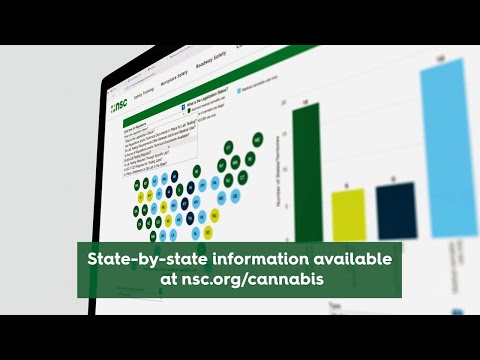
The practical challenge is not simply whether cannabis is legal in a state, the more important question is how to prevent on-the-job impairment, unsafe decision-making, and inconsistent policy enforcement while still responding fairly to changing legal and social norms. NSC conducted research into cannabis testing regulations in all 50 states to identify gaps and potential consumer safety hazards, with the goal of helping state regulators, policymakers and business leaders make informed, evidence-based decisions. The results are available in this NSC report, State Cannabis Testing Programs: Current Obstacles and Needed Reforms for Consumer Safety and Health: Read the report.
As more states legalize cannabis for recreational and medicinal use, employers must take a clear, strong stance to ensure worker safety and protect employee rights. To help employers address the risks of cannabis in the workplace, NSC encourages business leaders to take key actions that include:
1. Establishing a clear, fair cannabis policy that prevents impairment in the workplace and provides support for employees
2. Building a safety-focused, trusting culture for employees to report cannabis use near or during work hours
3. Advocating for increased access to employee assistance programs (EAPs) and evidence-based health care benefits for those with substance use disorders
4. Training supervisors to recognize and respond to impairment in the workplace; learn more about NSC training at nsc.org/ImpairmentTraining
See additional NSC recommendations for employers to address cannabis in the workplace.
Driving after using cannabis can impair skills that are essential for safe driving, including attention, reaction time, lane control, decision-making and other complex psychomotor functions. Recent reviews of controlled driving conclude that acute THC exposure can worsen driving performance and increase crash risk after recent cannabis use.
At the same time, cannabis impairment is not measured as clearly as alcohol impairment. Newer peer-reviewed evidence suggests that blood THC concentration does not show a consistent linear relationship with driving impairment across studies, which means a positive drug test or THC level alone should not be treated as a precise measure of driving ability at a specific moment. This is one reason cannabis-impaired driving remains challenging for policy, enforcement and public education.
Research also shows that cannabis use is common among drivers involved in serious crashes, but presence does not necessarily mean causation or real-time impairment. In one 2024 study of fatally injured drivers in the United States, more than one-third tested positive for cannabis, and drivers in states with recreational cannabis laws had higher odds of cannabis positivity than drivers in states without comprehensive cannabis laws. These findings reinforce the need for prevention and education, while also underscoring the importance of interpreting toxicology results carefully.
Cannabis can become even more dangerous when used with alcohol or other substances. Reviews of the literature indicate that combined alcohol and cannabis use can produce additive impairment, creating greater safety risk than either substance alone.
Because cannabis impairment is harder to quantify than alcohol impairment, employers, safety professionals and policymakers should avoid overly simple assumptions based on THC levels alone. The strongest evidence supports public education that emphasizes a clear message: do not drive after using THC-containing cannabis, especially when alcohol or other impairing substances are also involved. Additional research is still needed to improve roadside and post-crash assessment of cannabis-related impairment.
This report describes the review of and updates to the NSC Alcohol, Drugs and Impairment Division recommendations for the toxicological investigation of suspected alcohol- and drug-impaired driving cases and motor vehicle fatalities.
The following resources can help you learn how cannabis can affect your employees’ ability to work, drive and function, discover policies you should have in your workplace, and get the information and resources you need to address cannabis use and cannabis-related products.
NSC Cannabis Surveys
NSC conducted a survey focused on the impact of cannabis in the workplace; 500 employers and 1,000 employees completed the survey.
NSC conducted a survey focused on public perceptions of the importance and impact of unintentional or preventable deaths compared to those of other causes of death and injury, including questions focused on cannabis. More than 2,000 surveys were completed.
Other Relevant Resources
Cannabidiol (CBD) Health & Safety Concerns
NSC ADID fact sheet summarizing key safety concerns related to CBD products, including product quality, THC contamination, labeling inaccuracies, possible adverse effects and workplace implications.
Performance Impairment in Safety-Sensitive Positions Related to Cannabis and Other Cannabinoids
NSC ADID position statement outlining concerns about cannabis and other impairing cannabinoids in safety-sensitive roles and why THC concentrations do not reliably measure performance impairment.
Cannabis Use, Public Health and Traffic Safety: Outcomes from the Scientific Literature and Expert Opinion on the Potential Impacts of Rescheduling
AAA Foundation resource reviewing scientific literature and expert perspectives on cannabis, public health and traffic safety implications.
ICADTS Fact Sheets
International fact sheets focused on alcohol, drugs and traffic safety, including resources relevant to cannabis, impairment and roadway risk.
Cannabis and Employment: Medical and Recreational Policies in the States
National Conference of State Legislatures overview of state cannabis employment laws, including protections, limitations and policy variation across states.
DOT’s Notice on Testing for Marijuana
U.S. Department of Transportation notice clarifying that state or recreational marijuana laws do not change DOT drug testing requirements for safety-sensitive transportation employees.
Attorney’s Guide to Cannabis and the Workplace
Bloomberg Law overview of workplace cannabis issues, including testing, accommodation, compliance and legal risk considerations for employers.
Marijuana and the Workplace
Addresses workplace considerations related to marijuana, including policy and employment issues.
National Alliance Cannabis Employer Guidance
Employer-oriented guidance on cannabis-related workplace issues, including benefit, legal and workforce considerations.
We’d appreciate your feedback so we can improve our offerings and make them most useful for you.
There are no items in your cart